How does hydrologic connectivity in a channelising landscape vary across a thaw season?
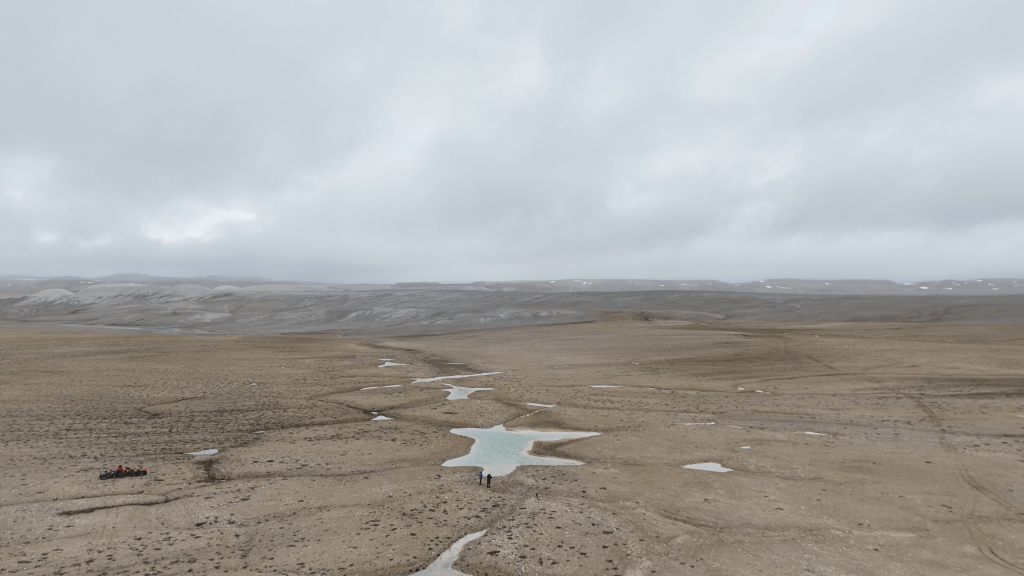
Polar and high mountain cold regions on Earth are marked by a strong seasonal cycle where the top-most ground layer freezes fully in the winter and thaws out over the summer months. As such, the near-surface hydrologic conditions are constantly evolving over the thaw season and the same magnitude-duration rain event may result in very different landscape response across a thaw season.
Developing channel networks in the High Arctic are often characterised by short channel segments interspersed by relatively flat depositional zones where water pools. In this project, I am using field observations, weather data and numerical modelling approaches to understand when in the thaw season surface water flow is maximised and how the hydrologic connectivity across pools is modulated by the landscape geometry, soil properties and climate.
 Home
Home 