Landscape memory and pattern formation
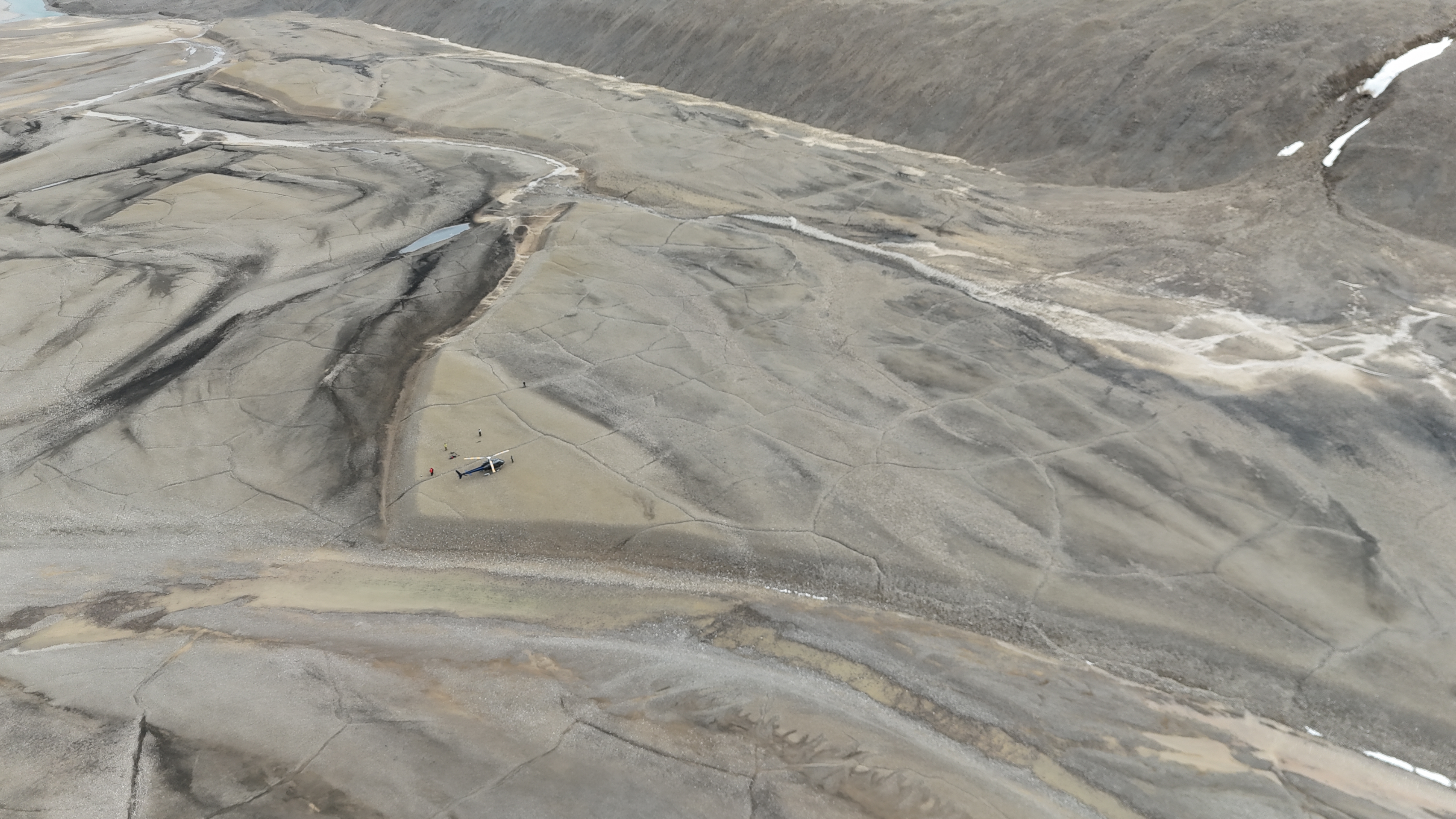
What happens when the landscape pushes back?
Typically, landscape evolution is modelled as a competition between relatively fast erosion processes and a slow tectonically-driven uplift rate. Over long enough time, those two processes eventually balance out to a steady-state. But what if the landscape pushes back on the same time scale as erosion is happening?
In the Arctic, seasonal freeze-thaw generates beautifully unique patterned ground via fracture processes and seasonal uplift. I am interested in understanding how patterned ground formation interacts with surface water erosion processes to form the unique landscapes we see in the Arctic now and whether the influence of freeze-thaw is detectable in landscapes even after the patterned ground is gone.
 Home
Home 